faux40 wrote: I think my next step will be to drain and pull the tank... 'cause that gas is never, ever touching that engine again!
John
Good idea

Glad to hear that Dave thinks the valves are safe !

An open forum for all enthusiasts of the classic 60 series Nissan Datsun Patrol to gather and share information and gain knowledge. Members share off-road stories, restoration advice, modification ideas in an atmosphere free of a single controller. The fo


faux40 wrote: I think my next step will be to drain and pull the tank... 'cause that gas is never, ever touching that engine again!
John
That sounded really suspicious to me as well...miksum56 wrote: I don't believe that bad gas bent pushrods and broke keepers.


A few days ago, I would have thought anyone justifying bent valves from bad gas was full of it - But, when it felt like the intake valve was coated with Henry's roof cement on a hot day, I converted. Dave had me try to push down on each valve the intakes, a couple intakes in particular would not move at all! It was like they were bolted in place. I am a believer -- Bad gas sucks!moore_rb wrote:That sounded really suspicious to me as well...miksum56 wrote: I don't believe that bad gas bent pushrods and broke keepers.
However- seeing how gummed up those intake ports are, and how crusty the piston crowns are after less than 20 miles on the engine... wow, who KNOWS what was going on inside there ?
I suppose if that same sticky gooey fuel residue was getting past the valve seat and up between the valve stem and the valve guide it could have stuck the valves in place just enough to put pressure back on the pushrod during the intake stroke...
if someone had shown me the picture of that piston without me knowing it was from a brand new engine, I would have thought it came from an engine with 100k on it



They used to say that if you put sugar in the fuel tank, you'll damage the engine badly. I thought it was some sort of urban legend, and apparently it still is . After looking at what happened to you with probably a different product, I'm shocked, and a believer as well. Please post pictures of the fuel that came out of it. Just for a test, pour a little bit in a metal cup and light it up and see if after everything is burned, there's some residue left.faux40 wrote: A few days ago, I would have thought anyone justifying bent valves from bad gas was full of it - But, when it felt like the intake valve was coated with Henry's roof cement on a hot day, I converted. Dave had me try to push down on each valve the intakes, a couple intakes in particular would not move at all! It was like they were bolted in place. I am a believer -- Bad gas sucks!
John
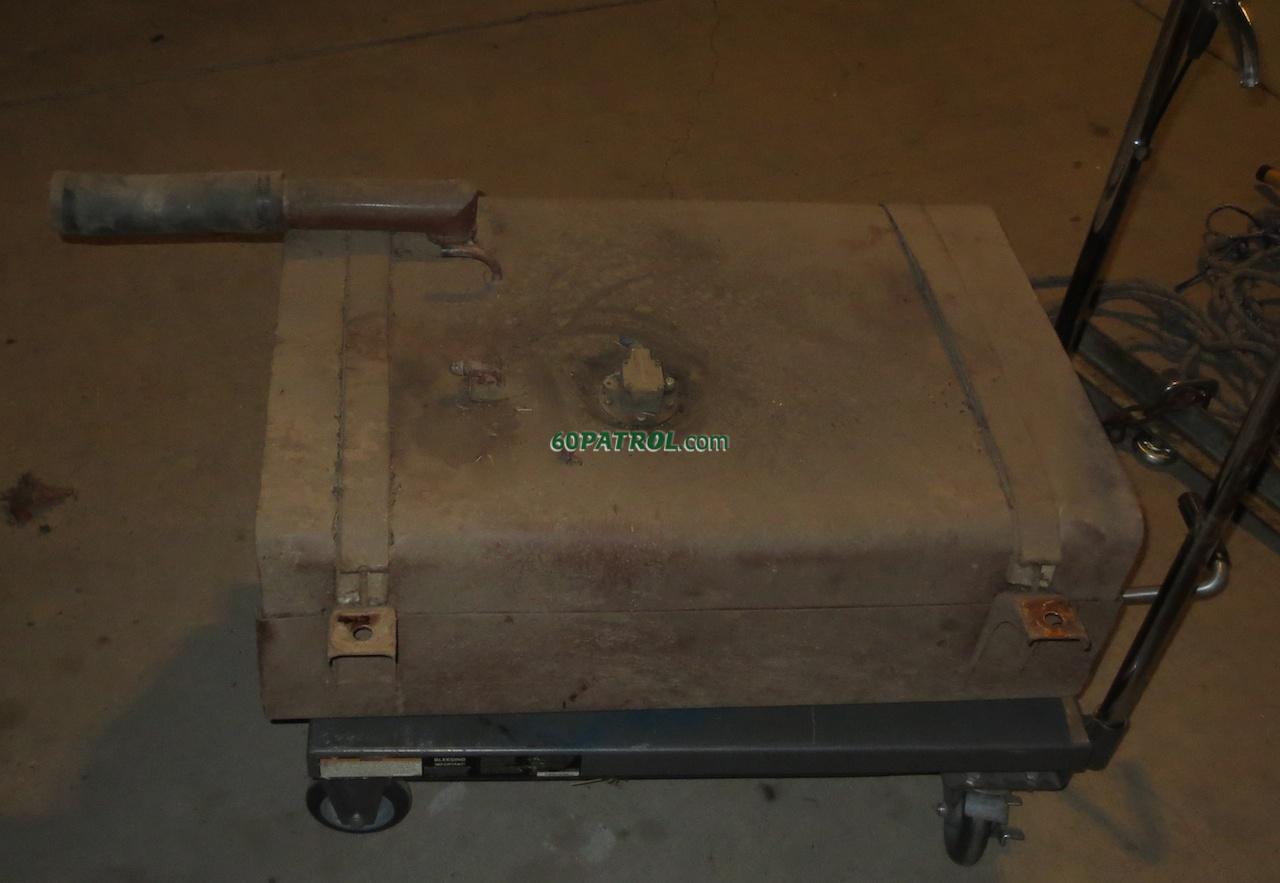
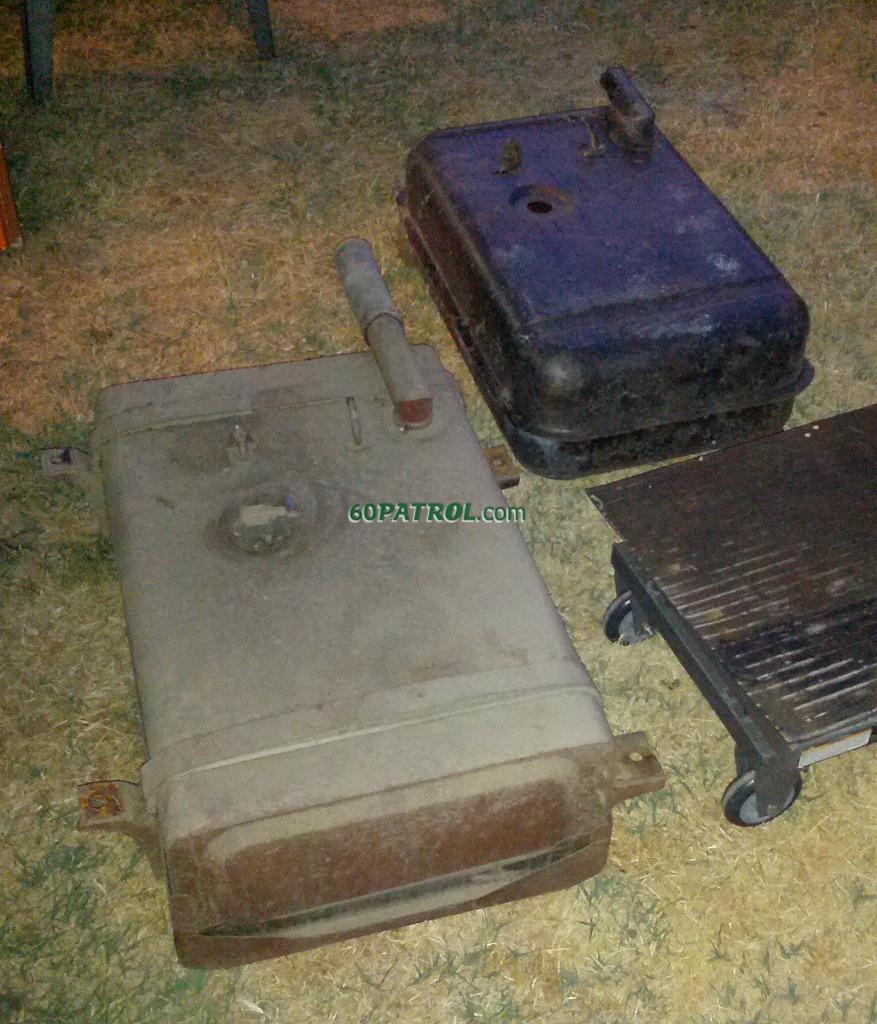
Both are factory tanks. Maybe RiverPatrol can gives the year model when they changed the tanks. The following picture shows the two tanks side by side, from images from the parts manuals.faux40 wrote: This is the tank from the green '66 parts Patrol next to the one out of the orange '67 -- They really are different. Are they both factory tanks?
John


Thanks for the tank scoop!RiverPatrol wrote:The fuel tank size changed in '66, from 15 gallon to 19 gallon. Shortly after that the PTO hole in the rear bumper/cross member disappeared also. This is because the larger tank blocked the access to that hole for a PTO drive shaft. The tank style apparently also changed in '66. I have seen both styles of tanks in different '66s.
The gas tank skid plates are also different for the different style tanks. The straps are longer for the more squared tank, as I recall.
Aside from siphoning the tank, did you also pull the drain plug? That will allow gravity to help drain some of the possible solids out.


I can tell you from first hand experience that it's not urban legend. Sugar will mess an engine up quickly if your filter doesn't clog up first.Esteban wrote: They used to say that if you put sugar in the fuel tank, you'll damage the engine badly. I thought it was some sort of urban legend, and apparently it still is . After looking at what happened to you with probably a different product, I'm shocked, and a believer as well.


